
BY FULTON MAY SOLUTIONS
Most businesses with a managed IT provider have IT that works. Things mostly run. Problems mostly get solved. The provider mostly shows up when needed.
Working is not the same as winning.
The businesses that use technology as a real competitive advantage — that automate what can be automated, that protect what matters, that make faster decisions because their data is actually accessible — are working from a different model.
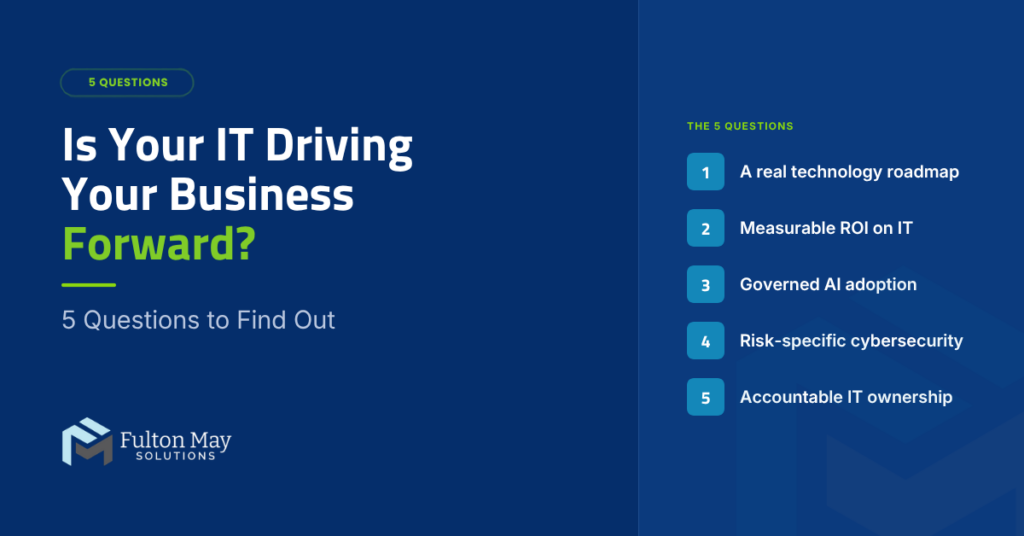
Here are five questions to help you figure out which side you’re on.
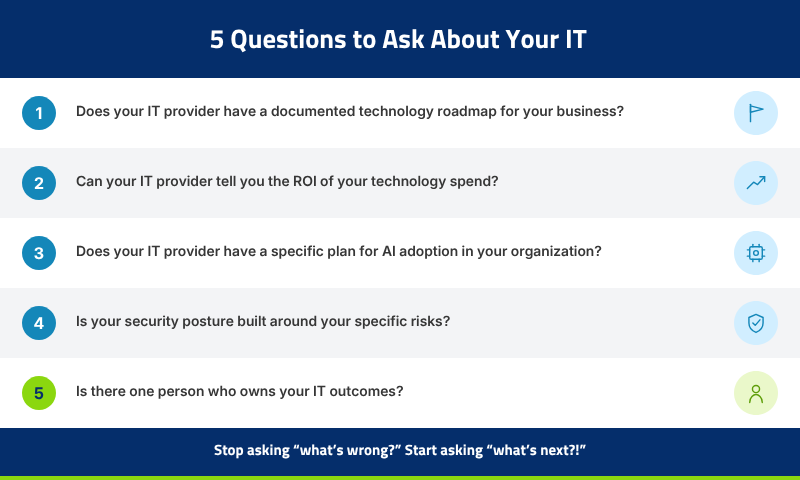
Question 1: Does your IT provider have a documented technology roadmap for your business?
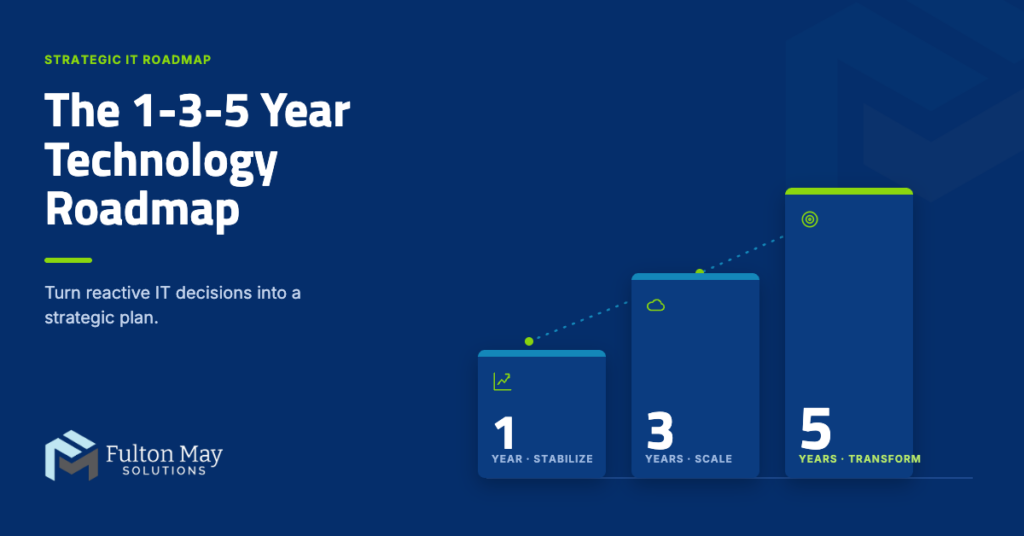
Not a general recommendation about upgrading to Windows 11. A specific, written plan that connects your technology investments to your business goals over the next one, three, and five years.
If the answer is no, your IT is operating without a strategy. Decisions are being made reactively — when things break, when contracts renew, when someone complains. That’s maintenance mode, not growth mode.
Question 2: Can your IT provider tell you the ROI of your technology spend?
Not just what you’re paying. What you’re getting.
A strategic IT partner should be able to show you, in plain language, what your technology investment is delivering — in hours saved, risks mitigated, processes automated, and capabilities added. If your IT budget is just a line item with no measurable return, that’s a problem.
Question 3: Does your IT provider have a specific plan for AI adoption in your organization?
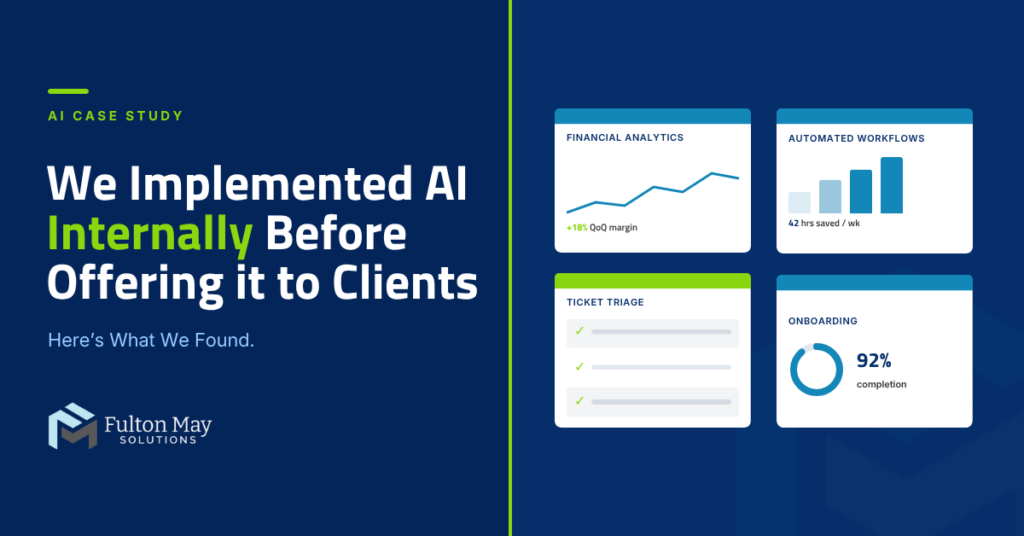
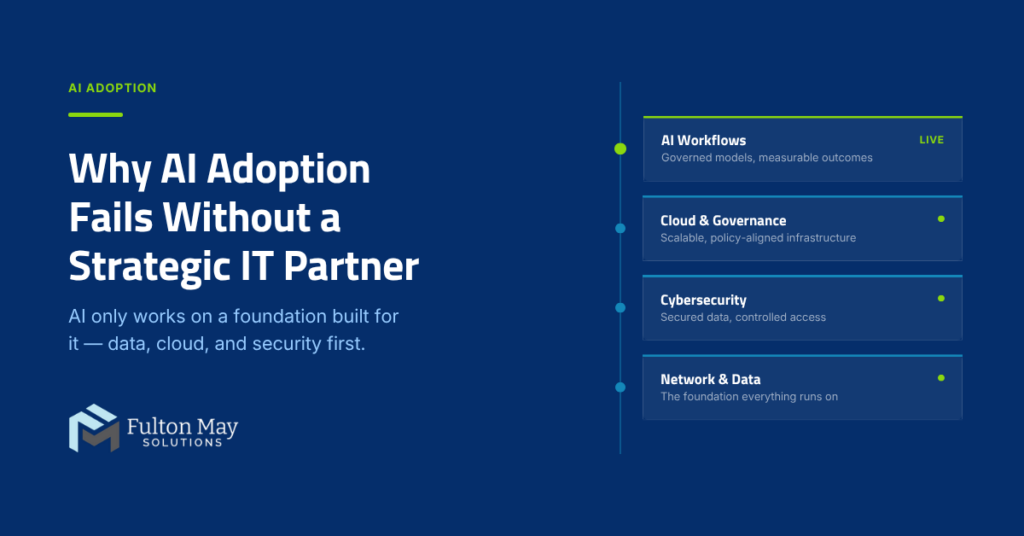
Not ‘we support AI tools.’ A specific, sequenced plan for how artificial intelligence will be adopted in your environment — which processes to automate first, what the governance framework looks like, how your data needs to be organized before AI can be useful.
Most standard IT providers don’t have this plan. They’re maintaining what exists. AI adoption requires building something new.
Question 4: Is your security posture built around your specific risks?
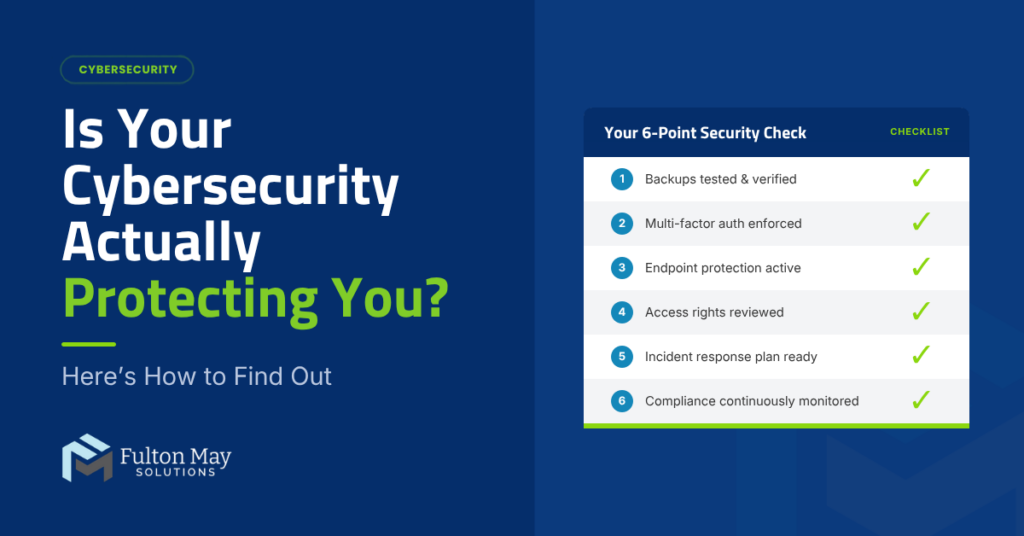
There’s a difference between standard cybersecurity protection — antivirus, patching, backups — and a security posture designed around the specific threats and exposures your business faces.
For a manufacturer, that means securing OT/IT connectivity, protecting industrial sensors and controllers, and ensuring that production systems can’t be compromised through the corporate network. For a financial services firm, it means protecting client data and meeting regulatory requirements. The risks are different. The protection should be too.
Question 5: Is there one person who owns your IT outcomes?
Not a help desk that picks up whoever is available. Not a shared account manager you talk to twice a year. One dedicated person who knows your environment, your business goals, your current challenges, and your roadmap — and who is accountable when things go wrong.
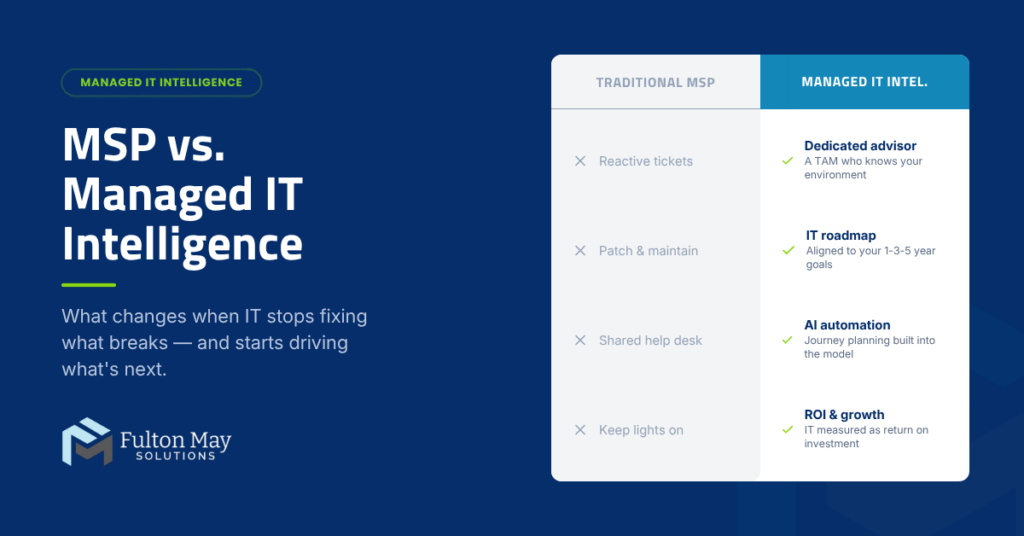
This is what the TAM model delivers. And it’s the difference that changes every other answer on this list.
What your answers mean
If you answered yes to all five, your IT model is genuinely working for your business. Most businesses can’t say that.
If you answered no to two or more, you have a gap between what your technology is doing and what it could be doing. That gap has a cost — in wasted hours, missed opportunities, and competitive ground lost to organizations that are moving faster.
Managed IT Intelligence is built to close that gap. Not by replacing your IT provider with a better version of the same model. By operating from a different model entirely — one where technology is measured by what it delivers for your business, not just whether it’s running.