
BY FULTON MAY SOLUTIONS
How does your business decide when to upgrade technology?
For most organizations, the honest answer is: when something breaks, when a contract expires, or when someone complains loudly enough. Technology decisions get made reactively — driven by problems, not by strategy.
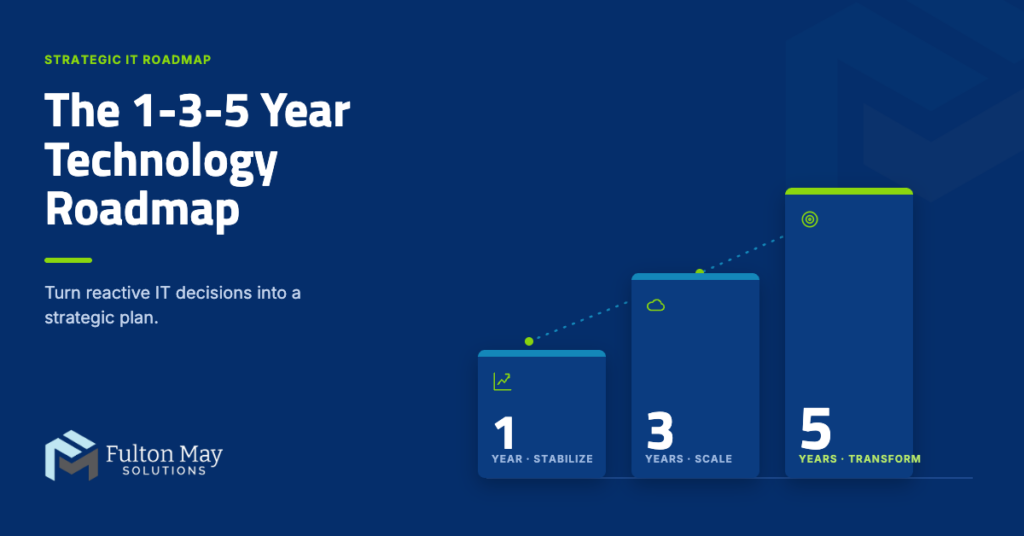
A 1-3-5 year technology roadmap changes that. It connects every IT investment to where your business is going — not just where it is today.
What a technology roadmap actually is
A technology roadmap is a written, living document that maps your IT investments to your business goals over a specific time horizon — in this case, one, three, and five years.
It’s not a list of things to buy. It’s a plan that answers specific questions:
What does the business need to accomplish in the next 12 months? What technology does that require?
Where is the business headed in three years? What infrastructure needs to be in place to get there?
What does the technology environment look like at year five — and what’s the path from here to there?
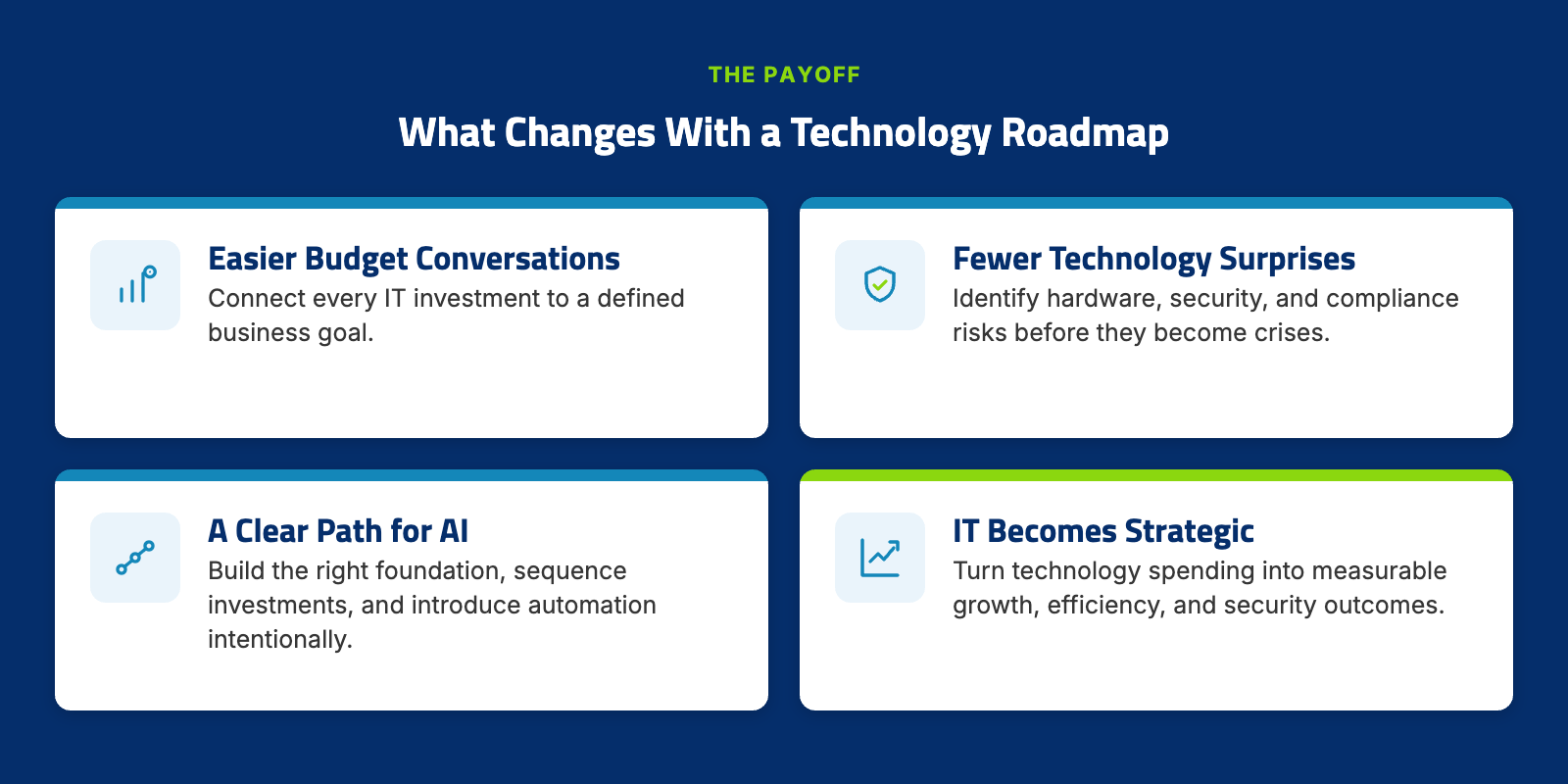
The roadmap translates business strategy into technology decisions. It means IT investments are made intentionally, with a clear rationale, rather than reactively when something stops working.
Who builds the roadmap
A technology roadmap is built by a strategic IT partner who understands both your business and your technology environment. In the Managed IT Intelligence model, this is the job of the Technical Account Manager (TAM) — a dedicated IT strategist who works alongside your leadership team to keep the roadmap current and aligned.
The roadmap isn’t a one-time document. It gets reviewed and updated as your business evolves. New goals get added. Completed milestones get checked off. Emerging risks get incorporated. It’s a living plan, not a static deliverable.
If your technology decisions are still being made reactively — when things break, when contracts expire, when someone pushes hard enough — a roadmap is the single change that creates the most leverage across everything else.